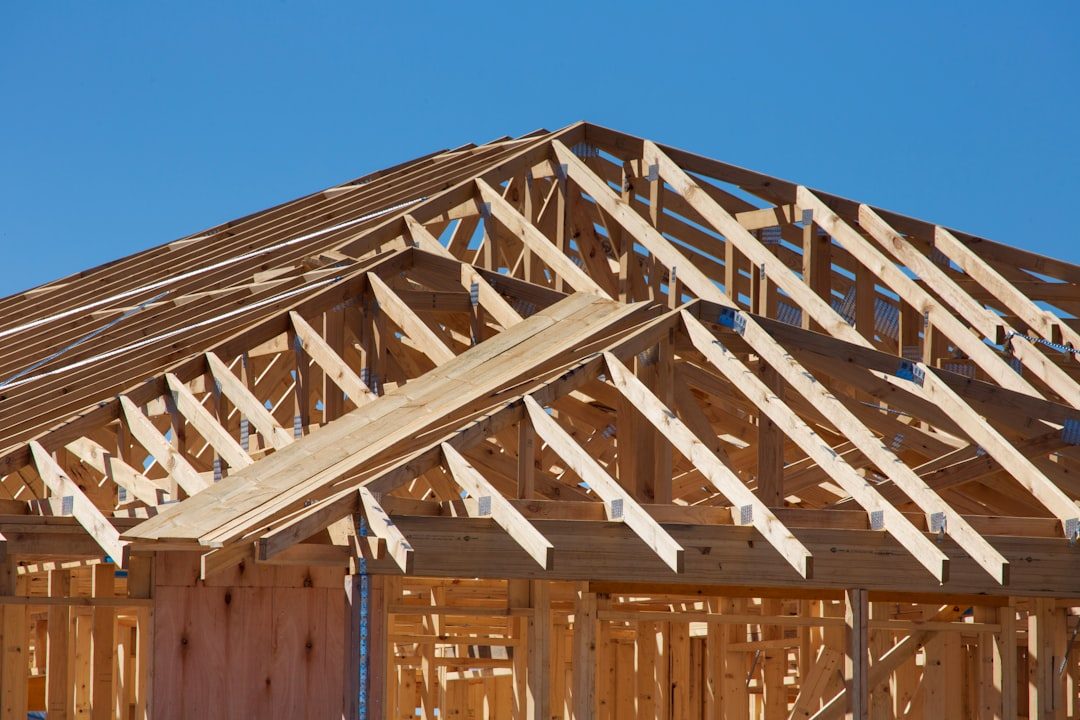
A new single family home under 4,000 square feet of living area in unincorporated Collier County owes $34,051.97 in county impact fees, and one at 4,000 square feet or more owes $36,823.95. Fire district fees come on top of both. Those are the rates that took effect May 1, 2026, and they are up about $1,400 from the schedule that ran in February.
Almost nobody quotes you that number up front. It shows up late, it is real money, and it is worth understanding before you sign a build contract or buy a lot.
What Collier County impact fees actually pay for
Impact fees are a one-time charge the county collects on new construction to pay for the roads, schools, parks, water lines, and public buildings that a new household uses. They are not property taxes and they are not permit fees. You pay them once, per dwelling unit, when the home is built.
Collier breaks the total into eleven separate line items. On a single family home under 4,000 square feet, the big ones are schools at $9,888.16 and roads at $8,217.75. Water is $5,441.00 and sewer is $4,847.00. The rest, EMS, government buildings, jail, law enforcement, libraries, community parks, and regional parks, add up to a little over $5,300 combined.
Cross into the 4,000 square foot tier and roads jump to $9,893.00 and the subtotal climbs to $26,535.95 before water and sewer. Schools do not change. Water and sewer do not change.
Fire fees are separate, and they vary by district
The county schedule is labeled "total without fire" for a reason. Fire impact fees are collected on behalf of the independent fire districts, and the rate depends on which district the property sits in.
North Collier Fire charges a flat $476 per unit for a single family home under 4,000 square feet, and $833 at 4,000 and above. Greater Naples Fire charges by the square foot under roof, at $0.433. Immokalee is $0.94 per square foot and Ochopee is $0.60, both capped at 4,000 square feet.
On a 3,400 square foot home with about 4,500 square feet under roof in the Greater Naples district, that is roughly $1,950 on top of the $34,051.97. Call it $36,000 all in.
The 4,000 square foot cliff
This is the part I would want to know before I drew plans. Collier has exactly two tiers for a single family home, split at 4,000 square feet of living area. Going from 3,990 to 4,010 square feet costs you $2,771.98 in additional county impact fees, plus another $357 if you are in North Collier Fire.
Living area is the measure, not total square footage. A detached garage or a shed does not count and is not assessed county impact fees at all, though fire fees can still apply. But an enclosed lanai does count. If you pull the sliders and add air conditioning vents, the county treats that space as new living area. Same with converting a garage to a room, even if you only use it for storage. A guest house is treated as an addition to the main home for tier purposes.
So if you are at 3,800 square feet and thinking about enclosing the lanai in year two, you may be walking into a $2,772 bill you did not budget for. Run the numbers before the contractor does.
Tearing down and rebuilding
Here is the credit most people never hear about. If a legally permitted home already stood on the lot, you are only charged the difference between the impact fees for the old home's size and the new home's size, both figured at today's rates. You are not starting from zero.
There is no deadline to rebuild. The credit holds as long as you can document that the original home was permitted and that any impact fees due at the time were paid. On a teardown in an older Naples neighborhood, that credit is often worth $20,000 or more. Get the old permit records before you close on the lot.
City of Naples and Marco Island are different
If the property is inside the City of Naples or the City of Marco Island, the county does not assess community parks, law enforcement, fire, water, or sewer. The county portion drops to $22,384.00 for a single family home under 4,000 square feet. The cities levy their own fees on top of that, so you have to check with the city directly. In Everglades City, the county does not assess community parks, roads, water, or sewer.
Ave Maria has its own separate rate schedule entirely.
Age-restricted communities pay less
A single family detached home in a retirement community under 4,000 square feet comes in at $26,988.76, about $7,000 below the standard rate. The savings are almost entirely in roads, $3,601.00 instead of $8,217.75, since the county assumes fewer daily trips. If you are comparing a 55-plus community against a conventional one, that difference is already baked into the builder's price.
When you actually pay
The fees are calculated using the rates in effect when the building permit is submitted, or the rates at certificate of occupancy, whichever is lower. That is a genuine protection during a year like this one when rates are stepping up in phases. You pay the county fees before the certificate of occupancy is issued. Fire impact fees are due earlier, at permit issuance. Permits pulled through the City of Naples or Marco Island are due at issuance too.
If you are buying a spec home or a production build, the builder usually pays these and rolls them into the contract price. Ask anyway. I have seen contracts that pass through an impact fee increase to the buyer, and with rates moving twice in six months, that clause is not theoretical.
Check the number yourself
Collier runs a public impact fee calculator on the CityView portal, and it uses the current effective rates. Enter the use, location, square footage, and fire district and it gives you the figure. The Impact Fee Administration office answers questions at 239-252-6237.
One more thing worth pairing with this: impact fees are a one-time cost, but in many newer Collier and Lee communities there is also an annual assessment on top of your taxes. I covered that in what a CDD fee is in Southwest Florida. And if you are budgeting a build, what it costs to build a pool here is the other number that surprises people.
Have questions about a specific property or neighborhood? Call John at 239-304-6224 or send a message.